


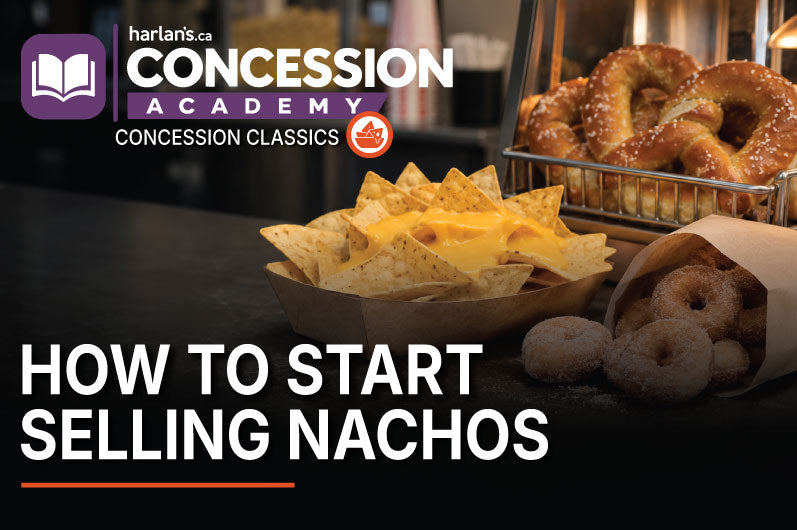
Starting a nacho program is simpler than many operators expect. At its most basic, you need tortilla chips, nacho cheese and a convenient way to serve them. Pre-portioned chips paired with ready-to-serve cheese cups can be a straightforward starting point, even without a dedicated cheese dispenser. As sales grow, bulk chips, heated bagged cheese and display cabinets can help you build a faster, more complete concession station.
The best setup depends on how many orders you expect, how quickly customers need to be served, how much counter space you have and whether staff are available to assemble each order. Here's how to make those decisions without buying equipment you don't yet need.
What do you need to start selling nachos?
Start with the essentials. Add equipment only when it solves an actual serving, storage or merchandising problem.
| Item | Essential? | What to consider |
|---|---|---|
| Tortilla chips | Yes | Choose sealed portion packs or bulk chips for serving to order. |
| Nacho cheese | Yes | Pre-portioned cups, compatible dispenser bags or sauce intended for a suitable warmer. |
| Packaging | As needed | Sealed chips and cheese cups can be handed out separately; assembled orders generally need a tray. |
| Cheese warmer | Depends | Not mandatory for products approved to be served without heating. Required equipment depends on the cheese format and desired service temperature. |
| Thermometer | For hot holding | Check food temperature and follow the applicable food-safety requirements. |
| Cheese dispenser | Optional | Useful for dispensing compatible bagged cheese during steady-volume service. |
| Chip warmer or display cabinet | Optional | For product presentation, accessible stock and warm chips. |
Portion-packed vs. bulk nacho chips
Harlan's offers 3 oz (85 g) portion-packed nacho chips and bulk nacho chips in 2 lb bags. Both can work well; the difference is how the operator serves them.
| Factor | Portion packs | Bulk chips |
|---|---|---|
| Portion control | Consistent quantity in each sealed pack | Depends on the scoop and staff procedure |
| Service | Hand over a pack with a cheese cup | Scoop into a tray for each order |
| Inventory | Easy to count individual servings | Measure servings by weight or scoop size |
| Presentation | Convenient packaged format | More flexibility for a made-to-order tray |
| Waste management | Less handling before the package is opened | Opened bags need proper sealing and rotation |
Harlan's practical recommendation: If you're testing nachos at a small counter, portion packs are an easy starting point. If you're consistently serving freshly assembled trays, bulk chips give you more control over the portion and presentation. Whichever you choose, establish a consistent serving size before setting your selling price.
Which nacho cheese system should you choose?
There are three common approaches: individual cheese cups, a bagged-cheese dispenser and a warmer designed for bulk sauce. Each has different equipment and handling requirements.
| System | Best suited to | Advantages | Considerations |
|---|---|---|---|
| Individual cheese cups | Small counters, grab-and-go service, newer programs | Defined portions; limited product handling; simple stock counting | Check storage and serving directions; warming may be optional for the specific product |
| Compatible bagged cheese and dispenser | Regular sales and staffed counters | Dispenses cheese into trays; allows a standard serving procedure | Machine investment, bag compatibility, loading, sanitation and hot-holding requirements |
| Bulk cheese with appropriate warmer | Operators preparing or portioning larger quantities | Flexibility in serving size and presentation | More open-product handling, cleaning and temperature monitoring |
Option 1: Individual nacho cheese cups
Rico's 3.5 oz portion cups are sold as ready-to-serve cheese and are described by Harlan's as suitable hot or cold. That means the decision to use a warmer is partly about your desired customer experience, not an automatic prerequisite for every sale. Always follow the product label for storage and serving conditions.
If you want to serve them warm, Harlan's also carries a 32-cup nacho cheese warmer. Confirm that your particular cheese cups are approved for, and physically compatible with, the warmer before use. This format is especially convenient when one employee is managing several concession items at once.
Option 2: Bagged nacho cheese in a dispenser
For a counter assembling nacho trays throughout the day, a compatible bagged-cheese system may make more sense. Harlan's carries Rico's 110 oz nacho cheese bags and a Rico's cheese dispenser. The dispenser's product description says it holds two bags and uses a pump system to dispense the cheese.
Option 3: Bulk cheese sauce in a suitable warmer
Some operators prefer portioning cheese from a larger container using a commercial warming system. Harlan's lists a Cretors 7-quart countertop cheese warmer as one equipment option. Only use a sauce and warming method specifically suitable for that application; manufacturer instructions determine how the cheese should be heated, held, handled and stored once opened.
This option may make sense when you want flexible portion sizes or use the sauce across several menu items, but it also introduces more handling and cleanup than sealed portion cups.
Choosing the right nacho tray
For assembled nachos, the tray is part of the serving system. A divided tray keeps the cheese separate so customers can dip, rather than having chips absorb the sauce before they're eaten.
| Tray | Practical use |
|---|---|
| Small two-compartment nacho tray | Compact portions, simple cheese-and-chip presentation |
| Large two-compartment nacho tray | Larger assembled portions with a separate cheese compartment |
| Three-compartment nacho tray | Orders with an extra topping such as salsa or jalapeños |
Test your actual scoop of chips and portion of cheese in the tray before committing to a size. The product names' “2 oz” and “4 oz” labels should not be assumed to describe the chip portion; confirm what they refer to with your supplier.
Three practical nacho station setups
| Type of operation | Recommended starting setup | Why it works |
|---|---|---|
| Small concession counter | Sealed portion-pack chips and individual ready-to-serve cheese cups; optional warming | Minimal preparation and straightforward inventory control |
| Busy recreation centre or arena | Bulk chips, compatible bagged-cheese dispenser and two-compartment trays | Staff can assemble repeatable portions during busy intervals |
| High-volume theatre or event location | Bulk chips, compatible dispenser, trays and potentially a chip holding/display cabinet | Organized service area and product accessible during demand peaks |
These are starting points rather than hard rules. Before committing to equipment, estimate the peak number of orders in your busiest 15–30 minutes—not just the number of orders in a typical day. That will tell you much more about the serving workflow you need.
Food safety: storing, warming and serving nacho cheese
Different cheese products have different storage and serving directions. Don't assume that all nacho sauces need to be heated, that all opened products can be held for the same period, or that every warmer works with every package. Begin with the exact product label and equipment manual.
- Before opening: Store each product as its label requires. Check the best-before date and rotate stock.
- When serving without heating: Use only products intended for that type of service, and follow the manufacturer's storage and handling instructions.
- When hot holding: Use suitable commercial equipment and check the food temperature with an appropriate thermometer. Health Canada advises keeping hot foods at or above 60°C (140°F) and cold foods at or below 4°C (40°F).
- After opening: Follow product-specific refrigeration, handling and discard directions. Don't invent a common shelf life for different sauces and bag systems.
- Cleaning: Follow the manufacturer's schedule for your warmer or dispenser. Clean and sanitize scoops, utensils, contact surfaces and service areas as required.
- Local requirements: Confirm applicable food-premises rules with your local public-health authority before operating.
For general guidance, see Government of Canada food-safety advice. Your product's instructions and local foodservice requirements remain essential.
Common mistakes when starting a nacho program
| Mistake | Better approach |
|---|---|
| Buying a dispenser before knowing whether customers will buy nachos | Test demand with a simpler portion-cup setup when appropriate. |
| Assuming every cheese product needs the same heating method | Check the label and use compatible, approved equipment. |
| Serving inconsistent quantities | Define a chip scoop or pre-packed serving and a cheese portion. |
| Opening too much bulk product | Track usage and rotate stock to reduce waste. |
| Buying a tray that doesn't fit the serving | Assemble a sample order before selecting packaging. |
| Putting cheese on chips too early | Use divided trays or add cheese at service to preserve texture. |
| Ignoring rush-hour demand | Plan around the busiest serving window, not only daily totals. |
Frequently asked questions
What equipment do I need to sell nachos?
At minimum, you need chips, nacho cheese and an appropriate way to serve them. If you use pre-packaged chips and ready-to-serve cheese cups, a heated cheese dispenser may not be necessary. Other systems require suitable warming and dispensing equipment.
Do nacho cheese cups have to be heated?
Not always, but it's much more desirable to consumers. Harlan's describes its Rico's portion-cup cheese as ready to serve hot or cold. Check the exact product label before deciding how to store, display and serve it.
What's better: cheese cups or a bagged-cheese dispenser?
Portion cups simplify service and control the serving size. A compatible bagged-cheese dispenser is better suited to staffed counters assembling nachos regularly. Choose based on demand, equipment cost, labour and food handling.
Do nacho chips need to be kept warm?
No. A chip warmer is optional. Operators use them for product presentation, warming and holding convenience, not because every nacho order requires one.
Can I put any cheese sauce in a nacho dispenser?
No. Dispensers have specific container and product requirements. Verify compatibility with the equipment manufacturer or supplier before buying.
How do I keep nachos from getting soggy?
Keep the cheese separate from the chips in a divided tray, or add it immediately before serving. Avoid holding fully assembled nachos longer than needed.
What's the easiest nacho program for a small concession stand?
Portion-packed chips and ready-to-serve cheese cups are a practical starting point. You can add a compatible cup warmer or change to a dispenser system when demand warrants it.
How do I calculate nacho cost per serving?
Calculate the cost of one portion of chips, one portion of cheese and any tray or other packaging. Add these together for a basic direct product cost, then compare that cost with your selling price. Include waste, payment fees, labour and equipment costs when evaluating overall profitability.
Explore Harlan's nacho products
Browse Harlan's nacho chips, cheese, trays and supplies or the Cretors equipment collection to compare options for your space and service style.

Leave a comment
This site is protected by hCaptcha and the hCaptcha Privacy Policy and Terms of Service apply.